
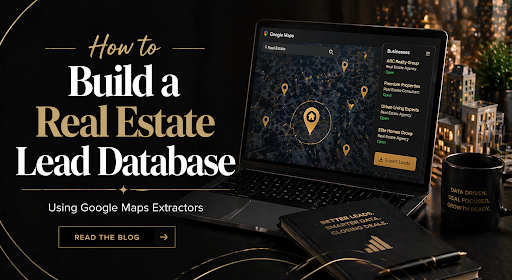
In today’s highly competitive real estate market, having access to the right leads can make a significant difference in your success. Instead of relying on expensive advertising campaigns or outdated directories, many professionals now use a Google maps email extractor to build highly targeted and location-based lead databases directly from Google Maps.
This approach allows you to gather thousands of relevant real estate contacts—including agents, brokers, property consultants, and agencies—who are actively operating in your target areas. With the right strategy, these contacts can be nurtured and converted into valuable business opportunities.
Let’s break down how you can do it step by step.
1. Define Your Target Audience
Before you start using a Google maps email extractor, clearly identify who you want to target:
- Real estate agents – Individual professionals who help clients buy, sell, or rent properties, making them ideal targets for marketing and lead generation services.
- Property dealers – Local intermediaries who handle property transactions and often have strong connections in specific areas.
- Builders and developers – Companies involved in constructing residential or commercial projects, offering opportunities for long-term partnerships.
- Rental agencies – Businesses focused on leasing properties, which can benefit from consistent lead flow and marketing support.
This helps you build a focused and high-quality database.
2. Choose the Right Locations
Real estate is highly location-driven. Focus on:
- Specific cities (e.g., Mumbai, Delhi, Bangalore) – Focus on particular cities to build a more targeted and relevant database based on your business goals.
- High-growth areas – Target regions experiencing rapid development or increasing demand, as they offer better opportunities for lead generation and conversions.
- Premium or budget markets – Segment areas based on property pricing to align your services with the right audience and maximize effectiveness.
Targeting the right location ensures better relevance and higher conversions.
3. Use Smart Search Queries
Search queries play a key role in extracting quality data. Try variations like:
- “Real estate agents in Mumbai” – Helps you target professionals operating in a specific city for more localized and relevant lead generation.
- “Property dealers near me” – Captures nearby businesses based on location, making your database more accurate and geo-targeted.
- “Commercial real estate brokers in Delhi” – Focuses on a specific segment within real estate, allowing you to build a niche and high-quality database.
Using multiple keyword variations helps you capture a larger dataset.
4. Extract Key Business Information
With a Google maps email extractor, collect:
- Business name – Helps you identify the company and personalize your outreach for better engagement.
- Email address – Essential for running targeted email campaigns and initiating direct communication.
- Phone number – Useful for quick follow-ups and building a more personal connection through calls or messaging.
- Website – Provides insights into their services, projects, and credibility, allowing for more tailored pitches.
- Office location – Enables you to understand their operating area and create more localized and relevant outreach strategies.
This gives you multiple ways to connect with potential leads.
5. Clean and Organize Your Data
Raw data often needs refinement. Make sure to:
- Remove duplicate entries – Keep your database organized by eliminating repeated contacts, ensuring you don’t reach out to the same lead multiple times.
- Verify email formats – Check that email addresses are valid and properly structured to reduce bounce rates and improve deliverability.
- Eliminate incomplete records – Remove entries with missing key details to maintain a high-quality and reliable database for outreach.
A clean database improves outreach performance significantly.
6. Segment Your Leads
Organize your database based on:
- Location – Segment leads by city or region to create more localized and relevant outreach campaigns.
- Type of real estate business – Categorize contacts (agents, brokers, developers, rental agencies) to tailor your messaging based on their specific services.
- Company size – Group businesses as small, medium, or large to adjust your pitch, pricing, and value proposition effectively.
Segmentation allows you to create more personalized campaigns.
7. Enrich Your Data for Better Targeting
Enhance your database by adding:
- Social media profiles – Include platforms like Instagram, Facebook, or LinkedIn to understand their online presence and engage through multiple channels.
- Property specialization (residential/commercial) – Identify whether they focus on residential, commercial, or mixed properties to tailor your outreach more effectively.
- Market focus (luxury, rental, affordable housing) – Understand their target segment to position your services in a way that matches their audience and business goals.
This helps you tailor your messaging more effectively.
8. Use Multi-Channel Outreach
Once your database is ready, reach out through:
- Email marketing – A scalable way to reach real estate professionals with personalized offers, updates, and follow-ups.
- Phone calls – Direct communication that helps build trust quickly and allows you to understand client needs in real time.
- WhatsApp messages – Fast and informal outreach method, ideal for quick follow-ups and improving response rates in local markets.
- LinkedIn networking – A professional channel to connect with decision-makers, build credibility, and nurture long-term business relationships.
Multiple touchpoints increase your chances of getting responses.
9. Offer Value in Your Outreach
Instead of directly selling, start with:
- Free property listing audits – Offer a quick review of their property listings to identify gaps in visibility, presentation, or lead capture.
- Lead generation tips – Share practical suggestions to help them attract more buyers or tenants, positioning your expertise as valuable and actionable.
- Marketing insights – Provide data-driven observations about their current marketing efforts and suggest improvements to increase reach and conversions.
This builds trust and opens conversations.
10. Keep Updating Your Database
A strong database is always evolving:
- Add new real estate businesses – Continuously include newly listed agents, brokers, and agencies to keep your database fresh and growing.
- Remove inactive contacts – Eliminate businesses that are closed or unresponsive to maintain data quality and improve outreach efficiency.
- Update outdated information – Regularly refresh old details like phone numbers, emails, and websites to ensure your database stays accurate and reliable.
This ensures long-term effectiveness.
Final Thoughts
Using a Google maps email extractor to build a real estate lead database is a smart and scalable strategy for generating high-quality prospects. It helps you gather verified business information from Google Maps and turn it into a structured lead pipeline.
However, success doesn’t come from data collection alone—it depends on how effectively you manage, segment, and use that data in your outreach strategy.
When you focus on clean data management, targeted segmentation, and consistent engagement, your database becomes far more than just a list of contacts. It evolves into a powerful asset that drives consistent lead generation, better conversions, and long-term business growth.